
Civic Platform
Petitions carry no legal or political weight
Existing petition platforms have no way to confirm if a signer is a real, unique constituent - leaving them exposed to bot activity and duplicate or out-of-jurisdiction signatures.
Because signatures can't be verified against the electoral roll, elected officials have no obligation - and often no incentive - to treat petition totals as real evidence of constituent opinion.
Social platforms generate noise, not consensus
Open platforms optimize for engagement and virality, not structured deliberation - the loudest framing wins, not the most representative one.
There is no mechanism to separate a genuinely large, geographically real constituency from a small but highly vocal one.
Lawmakers are flying blind between elections
Outside of election cycles, elected representatives rely on expensive, slow, and often small-sample political polling to gauge constituent sentiment.
There is no continuous, verifiable, district-level channel connecting real voters to the specific people who represent them.
VoteSavy
What's missing: a channel that is SAVY
| S |
Structured
Produces a defensible signal, not a shouting match - arguments organized for and against, not buried in comment threads. |
|---|---|
| A |
Anonymous
Real people are willing to use it honestly, without fear of exposure for what they voted for. |
| V |
Verified
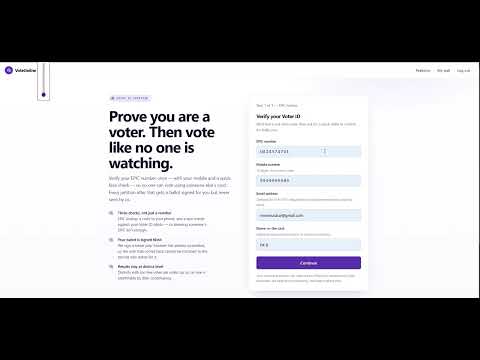
Can't be dismissed as bots or noise - every entry is a real, unique, geographically-confirmed voter. |
| Y |
Yields Results
Produces metrics representatives and researchers can act on - not just a running tally. |